


I’ve seen this before.
I’ve been a photographer for thirty years, and I’ve lived through a few of these apparent downfalls of my profession.
I can think of four events.
1. Stock Photography
The first thing I had experienced was the demise of assignment work in commercial and advertising work. That was when stock photography proliferated and so much “generic” imagery was then all of a sudden available. That was then in the late 1990s. I had just gotten started as a photographer in New York and did what I needed to do. Create a portfolio (physical!) and messenger it to agencies, publishers and all. I took out pages in the Black Book, Gold Book etc. I knew what I had to do.
2. The Digital Revolution
Then, in the 2000s digital photography emerged. For a good many years the technology was too new and had only very specialized applications, say for news shoots where speed was of the essence. Sensor technology took quite a few years to develop in order for a professional photographer to accept it as viable and have good enough image quality. That moment arrived in the mid-2000s and it was off to the races. Film photography started to disappear until, fast forward to today it’s a niche product. Still beautiful with lots of character, however limiting in its practical applications as the whole infrastructure to develop and print film became niche too. Compare it with the transition from vinyl to CD to now streaming.
That said, I had honed skills to develop film and make prints from it for many years. Skills that were mostly film related, that had a lot to do with what happened to the image after it was taken, from film to final print.
All of a sudden, poof… no need for those skills in the darkroom. Or, were these skills needed after all? I think so, and I’m glad I had that well rounded education now. I’ll write more about this as it is quite relevant.
3. Internet, Social Media
The next phase of the photography demise took only a few years after that: With the emergence of social media, magazines started dying. Budgets were cut and advertisers pulled away, or rather moved in a different direction. This meant less assignment work for magazines and also budget constraints with commercial shoots.
Every single time, somebody said photography was over. It wasn’t. It changed, and the people who understood what they were actually bringing to the table found a way through.
4. AI. Is it the final nail in the coffin?
Now it’s AI. And once again, people are asking me if what I do still has a future. It’s a fair question, so I want to answer it properly. No hype and no doom, just where I stand.
What’s actually happening?
Let’s state the obvious. AI isn’t coming, it’s here.
You can type a sentence into your favorite AI app and get something that looks exactly like a photograph: a person who never existed, in a place nobody went, in light that never fell on anything. And now it’s gotten really good, good enough that most of us can’t tell anymore.
It’s all over social media, and it’s in more and more TV commercials. Coca-Cola made AI holiday ads, people hated them, and they did it again the next year. The backlash didn’t stop them — looks like the numbers work after all.
A commercial that used to cost six figures with a crew, talent, a location, a director and a photographer or filmmaker, can now be made by a handful of people with a few mouse clicks and a keyboard, probably at a lower day rate too. If you’re a brand, why wouldn’t you? As a business owner I’m not going to argue that any company should pay more than it has to.
For as long as we’ve looked at a printed image or photos displayed on a screen, what we saw was one of two things: Either it was the real world, photographed or filmed, or it was imagined, like a cartoon. Even Disney had a real dancer act out Snow White before the animators drew her. But now there’s AI, this third thing. It looks real, but it isn’t. That’s the line that’s blurring.
So, how viable is photography still?
So yes, there’s fear among photographers, and I’m not going to pretend there isn’t. I talk to a lot of photographers, young ones just starting out and very seasoned ones. I keep hearing the same few questions:
“Am I going to lose work?” Well, some of us will. Stock, product, catalog, a lot of advertising. If the job was to make a picture of a thing, AI can make a picture of a thing. That’s just the truth. Better pivot.
“Will anyone believe a photograph again?” That one is real. Deepfakes, fake news photos, fake people selling you things. When you can’t tell what’s fake, you start doubting what’s real too, and that hurts everyone who photographs the real world, photojournalists most of all. This one’s just sad.
“What does this do to how people see themselves?” We already had a problem with retouching over the past decades: skin like plastic, perfect teeth, perfect symmetry. Now it’s a face that was never a face at all, and people compare themselves to that. Think about what does this to teenagers.
Then there’s the quiet one that nobody says out loud: “Does everything I spent my life learning still matter?”
I’ll be honest, I’ve asked myself that. Thirty years of learning light, learning people, learning how to get someone to drop their guard, and now somebody types a prompt. So I sat with it for a while. Here’s where I landed:
Where I use AI, and where I don’t
Before I tell you what I think, let me be straight about something. I use AI every single day. Boy, do I use it.
On the office side, what am I guilty of? Improving my writing, summarizing a conversation, negotiating and rewriting contracts. I use it for research, and for some ideation when I want to bounce an idea around. Most of all, I use it for troubleshooting and for learning new software. Instead of digging through a manual or watching ten YouTube videos, I just ask, and I’m up and running (mostly…).
It’s in my editing too. Capture One has an AI retouch tool, and Photoshop has the remove tool. Years ago I’d sit there cloning out a stray hair or a speck of dust by hand, picking exactly where to sample from. Now the computer does it for me, and it gets better every year. It’s the same job I was always doing, just faster.
Where I don’t use it, at least not yet, is culling. I’ve tried it here and there. But then I have to go through everything again to make sure it got it right, and that just adds to the workload. Deciding what is a good photo and what is not is one of the most personal decisions I make, and I still can’t trust a machine to make it for me.
I’m not going to pretend I’m above all of this. Like everyone else I reap a lot of benefits. More efficiency now and a faster workflow from beginning to end.
Where I draw the line
The way I see it, there are two kinds of AI: helpful AI and generative AI. I draw the line with the latter.
Photography has always been the real world, imaged. Sometimes optimized, sometimes manipulated. We retouched, we composited, we enhanced, let’s not be naive about any of that. But by and large it started with something that actually existed or happened: a real person, in a real place, in real light.
That’s provenance. The picture comes from a moment that existed.
A generated image doesn’t have that. It’s an algorithm filled with a whole lot of other people’s real pictures and turned into a “model”. It might look real, a lot of times better than the real world, but hey, it’s not.
Can you look at a synthetic person the way you look at a real one?
I can’t.
There’s nobody there. Nobody sat for it, nobody was nervous, nobody laughed at the wrong moment, and nobody had to trust anyone.
What I bring that a machine can’t
This is the part that answers the quiet question. What I contribute as a human isn’t the camera or the software. It’s three things:
Soft Skills
Reading a person the minute they walk into my studio. Making them comfortable. Knowing when to talk and when to be quiet. Directing someone without making them feel directed. None of that shows up in the file, but all of it shows up in the picture.
The human interaction.
A portrait is a record of two people meeting. There’s the first minute, the nerves and the small talk, and then the moment someone finally lets their guard down. That moment only happens because there’s trust in the room. You can’t prompt it. It has to happen.
Honoring the limits of the craft.
Photography has always had limits: one camera, one lens, the light you got, and the moment in front of you. Miss it and it’s gone. Those limits are what made it easy or hard, and what made it mean something. AI has no limits, so nothing is at stake.
I like the limits. It frames things.
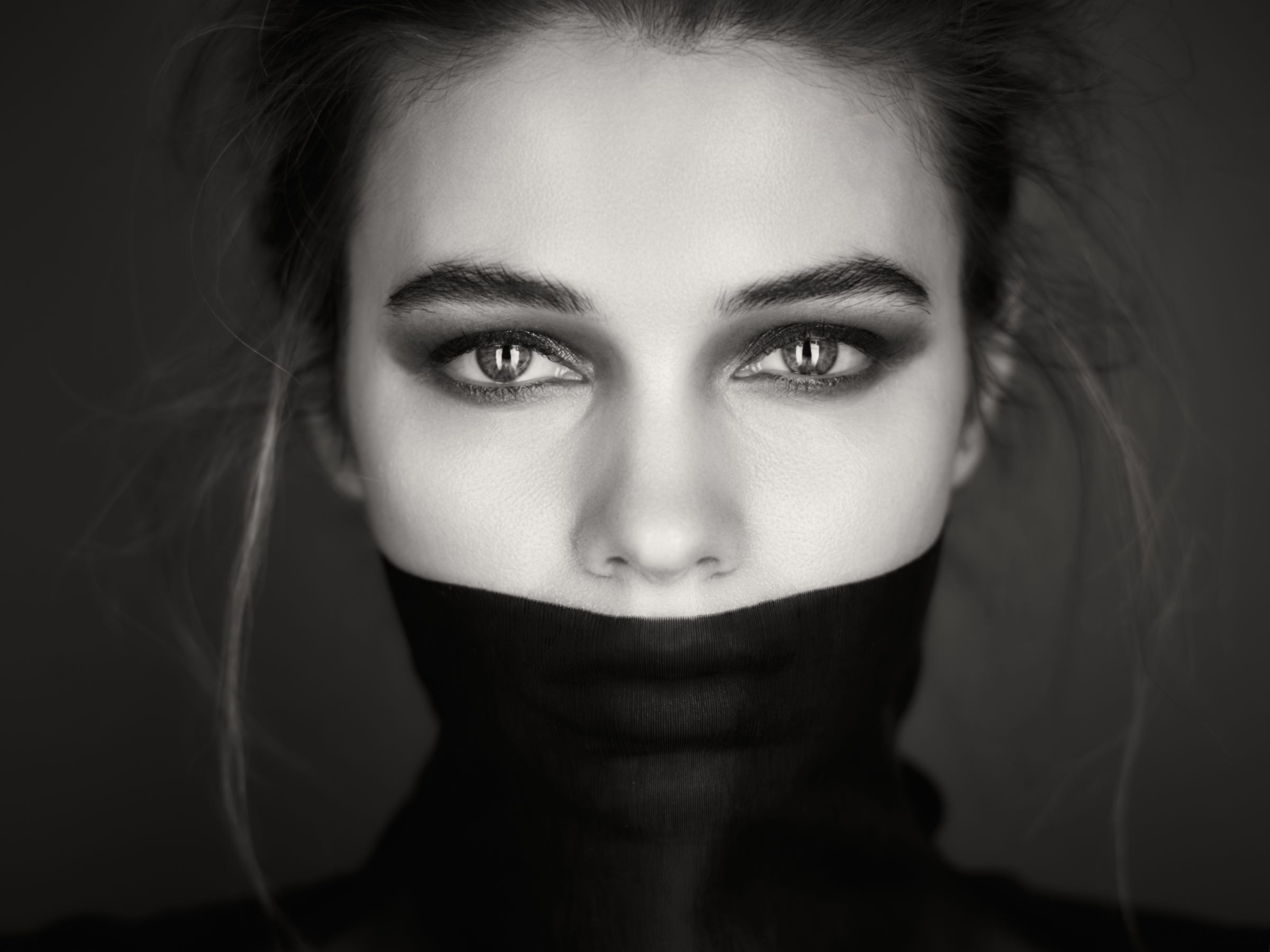
I’ve shot a fine art portrait series that specifically adheres to certain standards: real faces, medium format, against a painted backdrop that is always the same, and no retouching at all. I do, however apply traditional darkroom methods, such as dodging and burning in order to create a beautiful print. Here I manipulate tonal depth mostly. It’s emphasis, not manipulation.
Ansel Adams said it: The negative is the score, and the print is the performance. Dodging and burning is how you perform it.
How I choose to live with it
I stopped trying to compete with it. If a machine can make the picture, I don’t really want that job anyway. I want the job it can’t do.
I put more into the physical. Prints on real paper, in limited editions, that you can hang on a wall. Pictures of real places and real people, like the artisans I photographed in Peru. That print has a story because it happened.
I show how it’s made. The pre-production, the travel, the people on set, the mistakes. Provenance isn’t just a word I use; I show it. Some cameras now sign the file at the moment of capture with Content Credentials, so you can prove a picture is real. That technology is just emerging, and I hope will gain traction in the photography world.
I use AI the tools for the grunt work. Every hour AI saves me on admin and cleanup is an hour I get back for the part that’s actually mine.
And a word on the brands that use AI in their advertising: There’s always been an economy version of almost everything on the market, and AI in advertising hits that spot just right. That’s fine. But the luxury brands that sell on craft, on the real thing, need to stick with real people. You know, the ones made of flesh and bone. You get what you pay for.
Final Word
AI changes what a picture is worth. It doesn’t change what a photograph is.
I’ve watched stock, digital, the end of magazine print and then social media each reshape photography, and every time, the photographers that stayed flexible were the ones who got to go on with their craft, their artistry.
This time is a bit different. What I bring is the human part: the conversation, the trust, and respect for the limits that made this craft what it is. A machine doesn’t have any of that, so I see that human quality as my biggest differentiator.
I’m not worried about a machine replacing me. The only way I lose is if I start making pictures like a machine, so I won’t. I’ll keep using the tools where they help, keep photographing real people in real places, and keep showing you how it’s done.
Now I’d like to hear from you. Where do you draw the line? Leave a comment and tell me.